The Ground Beneath Your Home: Prairie Clay and Glacial Till
If you live in Bloomington, you already know that the soil here is not like the sandy loam you might find near a beach or the rocky ground of a mountain town. Central Illinois sits on a thick layer of prairie clay and glacial till, a legacy of the last ice age that left behind a dense, heavy mix of clay, silt, sand, and gravel. This soil is fertile for farming, but it is tough on foundations.
Prairie clay has an enormous capacity to hold water. When it rains, the clay swells like a sponge, expanding against your foundation walls with thousands of pounds of pressure. When the weather dries out, the clay shrinks and pulls away from the foundation, leaving gaps and voids. This constant cycle of expansion and contraction is the root cause of many Foundation Waterproofing challenges in the area. Glacial till adds another layer of complexity because it is not uniform; it can contain pockets of sand, gravel, and even buried boulders that create unpredictable drainage paths. Understanding this soil is the first step to understanding why your basement behaves the way it does.
How Illinois Soil Movement Causes Bloomington Foundation Cracks
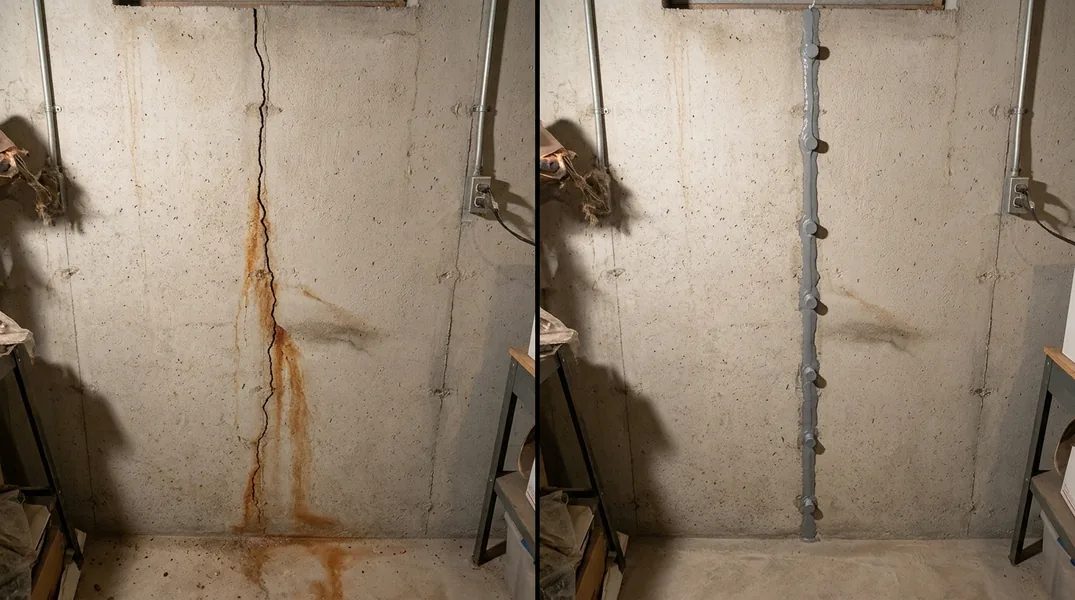
When the soil around your home moves, your foundation moves with it, but not always evenly. One side of the house may sit on clay that swells dramatically, while another side rests on a patch of gravelly till that drains quickly. This differential movement is what creates the Bloomington foundation cracks that so many homeowners notice in their basements and crawl spaces. Hairline cracks in poured concrete walls, stair-step cracks in block walls, and horizontal cracks near the soil line are all common signatures of soil pressure and settling.
Foundation settling is another major player. When the soil beneath a footing compresses or washes away, the foundation drops slightly, and the rigid concrete or masonry above it cannot flex. The result is cracking, sticking doors, and uneven floors. In older neighborhoods around Normal and Heyworth, we often see foundations that have been dealing with this movement for decades. Even newer homes are not immune, because the backfill soil used during construction is often looser than the undisturbed prairie clay around it, creating a bathtub effect that traps water against the foundation.
From Crack to Leak: How Water Finds Its Way In
A crack is more than a cosmetic flaw. It is a direct pathway for water. During a heavy spring rain, the clay soil becomes saturated and water pressure builds against your foundation walls. That water seeks the path of least resistance, which is often the crack itself. Once water enters, it can soak insulation, damage drywall, and create the musty environment that leads to mold. This is why Basement Waterproofing is about more than plugging a hole; it is about managing the water before it reaches the wall.
Many homeowners in Towanda and across the region first notice a problem when they see water seeping through the cove joint, where the floor meets the wall. This is a classic sign of hydrostatic pressure from saturated prairie clay. Others find damp spots on the walls or white, chalky efflorescence, which is a mineral deposit left behind when water evaporates through concrete. If you are seeing any of these signs, it is worth getting a professional opinion before the next rainy season. You can reach Bloomington Waterproofing at (309) 807-1768 to discuss what you are seeing.
Basement Waterproofing Near Me: Solutions That Work With Central Illinois Soil
The best waterproofing strategy for a Bloomington home depends on the specific soil conditions and the age of the foundation. For many homes, an Interior Drain Tile System is the most reliable solution. This system is installed along the inside perimeter of the basement footing, where it collects water that has entered the soil and directs it to a sump pump. It relieves hydrostatic pressure without excavating the entire exterior, which is often more practical for established landscaping and finished basements.
In some cases, Exterior Basement Waterproofing is the better approach, especially when the goal is to stop water before it ever touches the wall. This involves excavating down to the footing, applying a waterproof membrane, and installing drainage that carries water away from the foundation. Because prairie clay drains so slowly, exterior systems often need to be designed with that slow drainage in mind. A local contractor who understands Illinois soil movement can recommend the right combination of interior and exterior measures, rather than applying a one-size-fits-all fix.
When to Call a Professional (and What to Ask)
Not every crack is an emergency, but some are. Horizontal cracks, cracks wider than a quarter inch, and any crack that is actively leaking should be evaluated promptly. The same goes for bowing walls, which indicate that soil pressure has become severe enough to threaten the structural integrity of the foundation. If you are unsure, a professional inspection can give you peace of mind and a clear plan. Bloomington Waterproofing offers a free estimate so you can understand your options without pressure.
When you call, ask specific questions. How will the solution address the prairie clay on your property? Is the repair designed to handle both water pressure and soil movement? What kind of warranty is included? A reputable contractor will explain the reasoning behind the recommendation and help you understand the pricing involved. It also helps to ask about local experience, because a company that works in Central Illinois every day knows how the soil behaves from one neighborhood to the next. You can call (309) 807-1768 to speak with a local specialist and schedule an inspection.
Protecting Your Home for the Long Haul
Foundation issues rarely fix themselves, and in a climate with wet springs and dry summers, the cycle of soil movement will continue. The good news is that the problems caused by prairie clay and glacial till are well understood, and there are proven solutions. The key is to address water management and structural stability together, rather than treating a leak as an isolated nuisance. Homeowners who invest in a properly designed system often find that their basements stay dry through the heaviest rains and that small cracks stop growing.
If you have noticed foundation cracks, damp walls, or a musty smell in your basement, do not wait for the next storm to make it worse. Bloomington Waterproofing is here to help homeowners across Bloomington and the surrounding communities protect their biggest investment. Call (309) 807-1768 or visit the website to request a free estimate and take the first step toward a dry, stable foundation.
Looking for a professional basement waterproofing contractor in Bloomington? Bloomington Waterproofing responds fast for all your basement waterproofing needs.
Get a Free QuoteOur services: Basement Waterproofing · Interior Drain Tile System · Exterior Basement Waterproofing