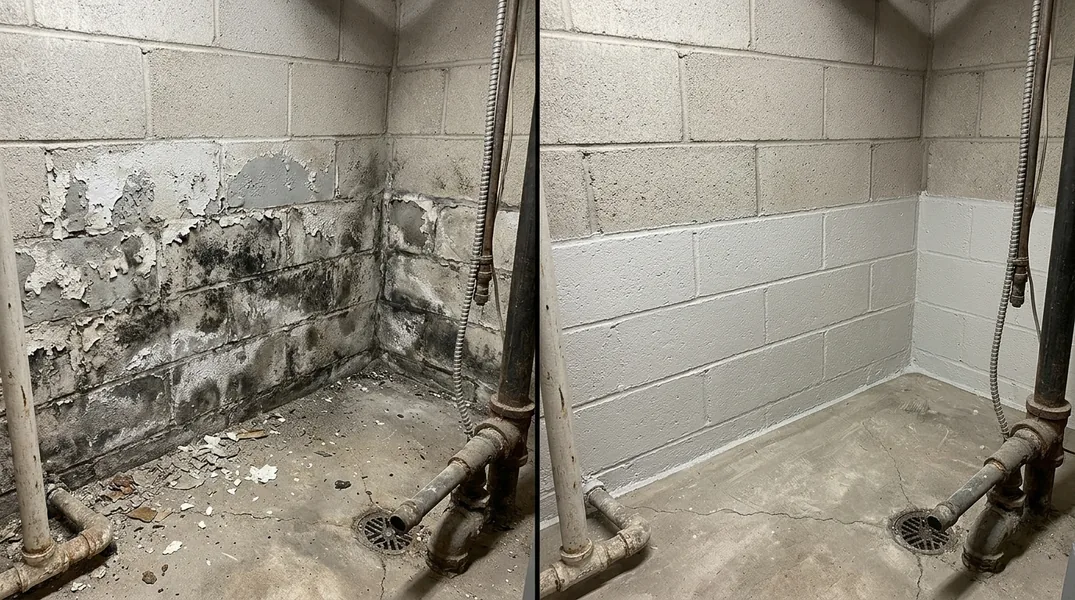
Why Bloomington Basements Face Unique Waterproofing Challenges
If you own a home in Bloomington, you already know that our local soil can be tough on basements. The region is known for prairie clay, a dense, heavy soil that absorbs water slowly and holds it against your foundation long after the rain stops. Unlike sandy or gravelly soils that drain quickly, prairie clay can stay saturated for days, creating constant hydrostatic pressure against your basement walls and floor. That pressure is the root cause of most basement leaks, seepage, and dampness in the area.
This is why a generic waterproofing approach often falls short here. A method that works in a dry climate or a sandy region may not hold up against the slow-draining clay common in central Illinois. Homeowners in Normal and Heyworth face the same soil conditions, which is why understanding the difference between interior and exterior waterproofing is so important before you invest. The right choice depends on your home's construction, the severity of the water issue, and how you want to solve it.
How Interior Waterproofing Works: Drain Tile and Sump Systems
An Interior Drain Tile System is installed along the inside perimeter of your basement, usually where the floor meets the wall. Technicians break up a narrow strip of concrete, dig a trench, and lay perforated pipe that channels water to a sump pit. A sump pump then moves that water out and away from the house. This approach relieves hydrostatic pressure before it can push water through your floor or wall joints, and it works well in homes where exterior excavation is impractical or too expensive.
Interior systems are popular because they can be installed year-round, they do not disturb your landscaping, and they often cost less than digging up the exterior. They also address the most common leak points: the cove joint where the floor and wall meet, and cracks in the basement floor. However, interior waterproofing does not stop water from entering the wall itself. If your walls are porous or have widespread cracking, you may also need wall crack injection or interior sealants. For many Bloomington homeowners, an interior system paired with a reliable sump pump is the most practical long-term solution.
How Exterior Waterproofing Works: Membranes and Footer Drains
Exterior Basement Waterproofing tackles the problem from the outside. It typically involves excavating down to the footing, applying a waterproof membrane or coating to the exterior wall, and installing a drain tile system at the footer to carry water away. The goal is to stop water before it ever reaches the basement wall, which can be highly effective in severe cases where the foundation is under constant pressure from saturated clay.
The trade-offs are significant: exterior work is more invasive, requires heavy excavation, and can disrupt driveways, decks, and landscaping. It is also generally more expensive than interior solutions. That said, for homes with block or stone foundations that are deteriorating, or for situations where the water problem is clearly coming through the walls rather than the floor, exterior waterproofing may be the better long-term fix. A professional assessment is essential to determine whether the added cost and disruption are justified for your property. If you are in Towanda or the surrounding area, the decision often comes down to foundation type and the source of the leak.
Drain Tile vs Exterior Membrane: Which Is Right for Your Home?
The choice between drain tile and an exterior membrane is not always either-or. In many cases, the best solution combines elements of both. Interior drain tile excels at managing water that reaches the basement floor, while an exterior membrane is designed to keep water out of the wall assembly entirely. If your basement leaks mainly at the floor-wall joint after heavy rain, an interior drain tile system is often the most cost-effective fix. If water is seeping through the walls themselves, especially in older homes with block foundations, exterior waterproofing or a combination approach may be necessary.
Local conditions matter, too. Prairie clay basement leaks tend to be persistent because the soil drains so slowly. That means a system must handle sustained pressure, not just a quick storm surge. A reputable contractor will evaluate your foundation, grading, gutter drainage, and the pattern of leaks before recommending a solution. At Bloomington Waterproofing, we start with a thorough inspection and explain the pros and cons of each option so you can make an informed decision. To schedule a free estimate, call (309) 807-1768.
Basement Waterproofing Cost in Bloomington: What to Budget
Cost is a major factor for most homeowners, and it is important to understand that interior and exterior solutions carry very different price tags. Interior drain tile systems are generally less expensive because they require less excavation and can be completed in a few days. Exterior waterproofing involves heavy equipment, excavation, and often restoration of landscaping or hardscaping, which drives up the total. For a typical Bloomington home, interior systems are often the more budget-friendly entry point, while exterior work is a larger investment that may be warranted for severe structural issues.
Rather than quoting a single number, a professional should provide a detailed scope of work based on your specific situation. Factors like basement size, foundation type, accessibility, and the presence of existing sump pumps all affect the final pricing. Be wary of any contractor who quotes a price without inspecting your basement. A transparent company will walk you through the options and help you weigh upfront cost against long-term protection. For a clear, no-pressure quote, reach out to Bloomington Waterproofing at (309) 807-1768.
Basement Waterproofing Near Me: When to Call a Professional
Some homeowners try to manage basement moisture with dehumidifiers, sealants, or regrading alone. While these can help with minor dampness, they rarely solve the underlying problem when prairie clay is pushing water against your foundation. Signs that it is time to call a professional include water pooling on the floor after rain, efflorescence (white powder) on the walls, musty odors, mold growth, and cracks that seem to widen over time. If you notice any of these, a professional assessment can save you from bigger repairs down the road.
Working with a local company matters because local crews understand the soil, the typical foundation styles, and the weather patterns that cause basement leaks in central Illinois. Whether you need Foundation Waterproofing or a full drainage solution, an experienced team can tailor the approach to your home. Bloomington Waterproofing serves homeowners throughout the area, and we are happy to answer questions and provide a free estimate. Call (309) 807-1768 to get started.
Looking for a professional basement waterproofing contractor in Bloomington? Bloomington Waterproofing responds fast for all your basement waterproofing needs.
Get a Free QuoteOur services: Basement Waterproofing · Interior Drain Tile System · Exterior Basement Waterproofing